
Result
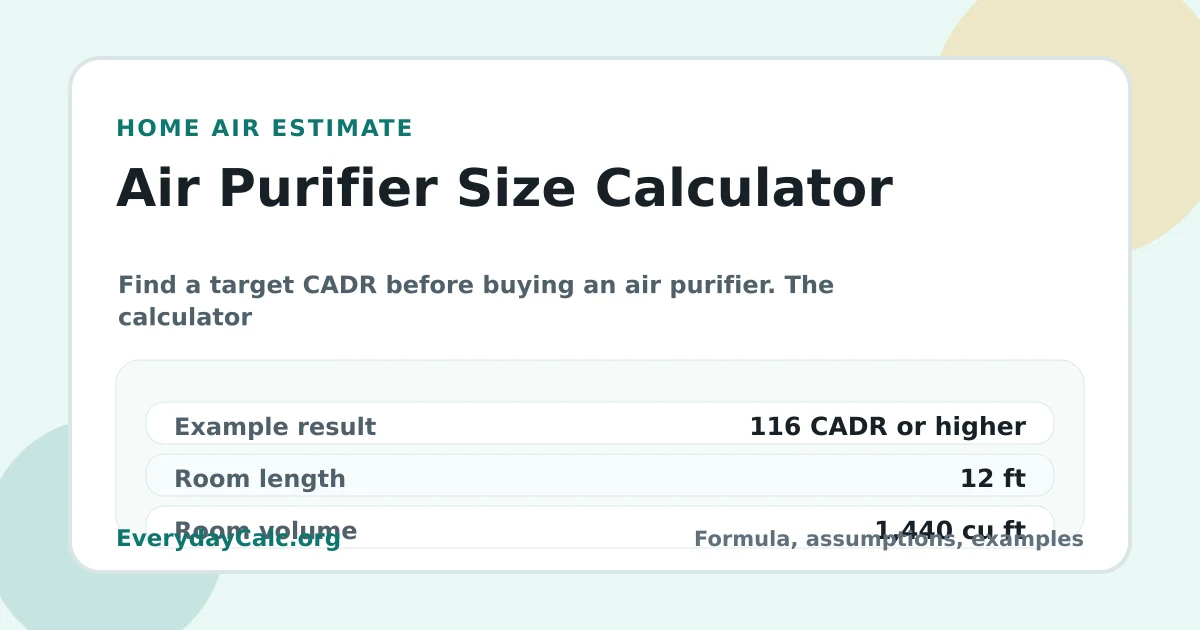
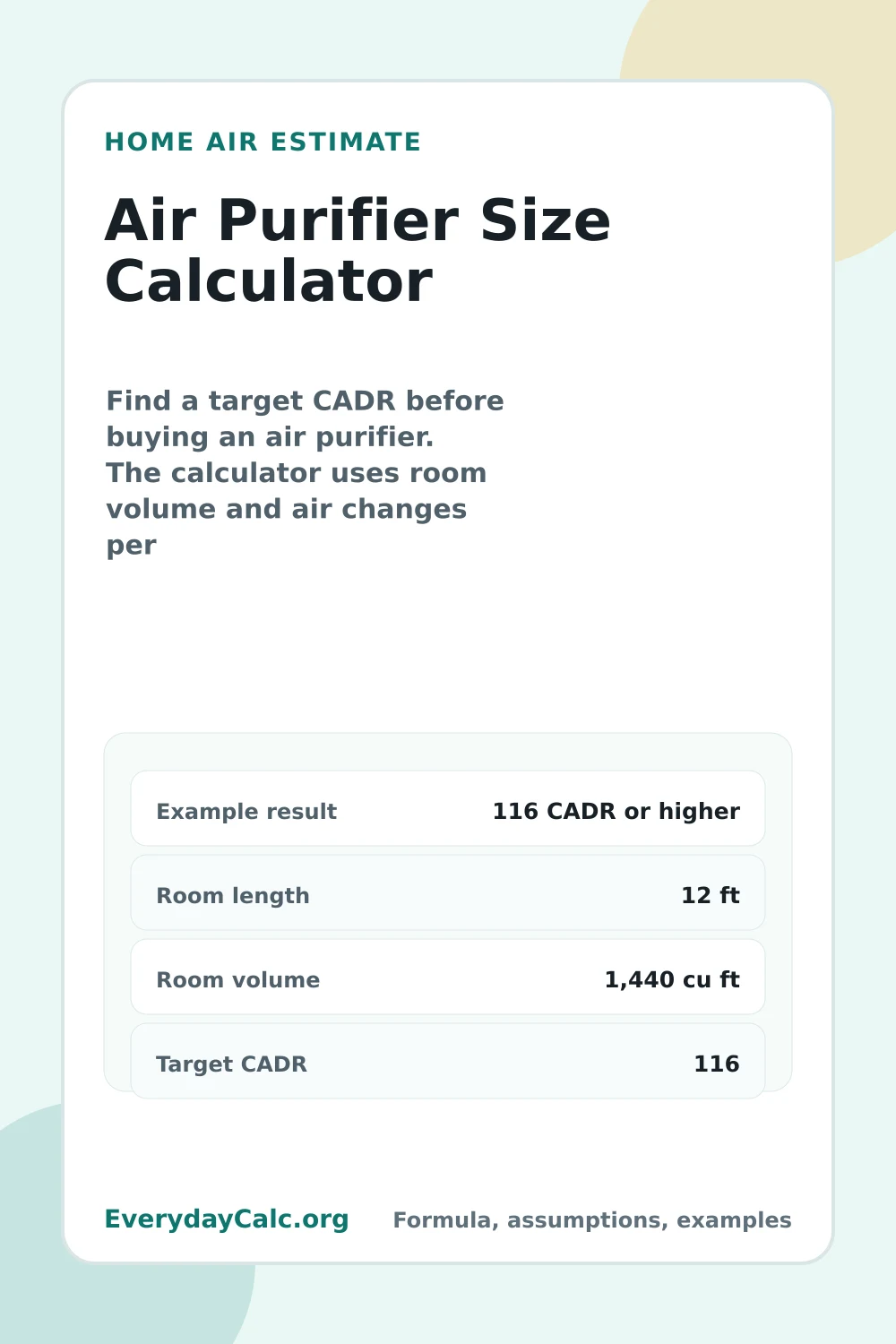
116 CADR or higher
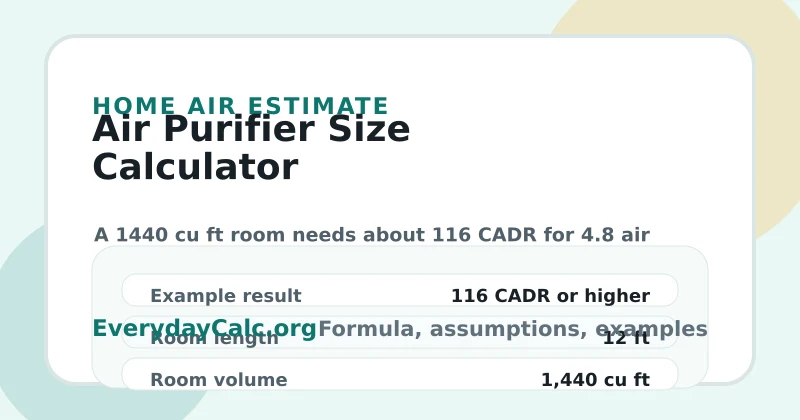
A 1440 cu ft room needs about 116 CADR for 4.8 air changes per hour.
- Room volume
- 1,440 cu ft
- Target CADR
- 116
More
Optional equipment checkWhat to compare before buying
Compare air purifiers by CADR, room-size rating, replacement filter cost, noise level, and the pollutant type you care about most.
Buying checklist
At a glance
- Cost
- Free
- Login
- Not required
- Best use
- Calculate the CADR rating an air purifier should have for your room size and desired air changes per hour.
- Output
- Browser result with print and PDF options
- Reviewed
- 2026-07-09
Result summary
Quick answer
With the sample inputs, this calculator returns 116 CADR or higher. Room volume: 1,440 cu ft. Use 116 CADR or higher as a planning estimate, then compare the inputs, formula notes, examples, and related calculators for this topic before acting on the result.
Publisher Published by EverydayCalc Editorial Editorial standards and limitations
Each calculator shows its formula and defines the inputs. Worked examples make the math checkable. The page also names the limits that can change the result.
Last calculation review:
Review scope: formula implementation, example parity, visible assumptions, source links, and result presentation. This is editorial and calculation QA, not professional financial, tax, legal, medical, engineering, or safety review.
Results are estimates based on the inputs provided and the assumptions shown on this page. For financial, tax, legal, medical, or other high-stakes decisions, verify results with a qualified professional or official source.
Instructions
How to use this calculator
Open the short walkthrough for choosing and checking inputs.
CADR is clean air delivery rate. Higher CADR means the purifier can clean more air per minute, which matters more as room volume increases.
Page guide
On this page
Jump directly to the part of the calculator you need.
Calculation details
Formula and methodology
See the exact math used to produce the result.
The calculator combines the inputs above into a practical planning estimate.
Before acting
Assumptions to check
Review the real-world details that can change the estimate.
The key inputs are Room length, Room width, Ceiling height, Air changes per hour. Confirm room size, ceiling height, insulation, humidity, airflow, product ratings, drainage, filters, and runtime needs.
More guidance Examples, methodology, and planning checks Open the worked example, review notes, reference tables, and practical next checks.
Choosing air changes
Bedrooms often feel comfortable around 4 to 5 air changes per hour. Allergy or smoke situations may benefit from a higher target.
When to use this calculator
- Sizing comfort or air-quality equipment
- Comparing room conditions with product ratings
- Checking whether operating cost or filters should affect the decision
Tips for better estimates
- Use real room conditions, humidity, insulation, and airflow.
- Check product ratings, noise, filters, drainage, and operating cost.
- Round up only when room conditions make the equipment work harder.
How this calculator is reviewed
This page is checked for inputs, formulas, examples, assumptions, topic fit, and related links. For this calculator, the review also covers room dimensions, humidity range, airflow limits, equipment ratings, and common sizing edge cases.
The sample result is covered by automated tests, and the page links to related calculators and, where available, supporting guides so readers can check the assumptions before acting. If a formula, label, or assumption looks off, send the page URL and your inputs through the contact page.
How this estimate was built
This page uses room volume and target air changes per hour to estimate clean air delivery rate, then encourages rounding up when noise or allergies make lower fan speeds important.
Worked example
Example inputs: Room length: 12 ft; Room width: 15 ft; Ceiling height: 8 ft; Air changes per hour: 4.8 ACH. With those values, the calculator returns 116 CADR or higher. A 1440 cu ft room needs about 116 CADR for 4.8 air changes per hour.
CADR to room size quick check
| Small bedroom | 100 to 150 CADR for everyday air cleaning |
|---|---|
| Medium bedroom | 150 to 250 CADR depending on air-change target |
| Large living room | 250 to 350 CADR or more |
| Allergy or smoke concerns | Round up and check filter replacement cost |
Example scenarios
- Use 116 CADR or higher as a starting point, then compare it with room size, humidity, insulation, and product ratings.
- Round up when the room is damp, sunny, drafty, open to other rooms, or used more heavily than average.
- Check operating cost or replacement filters if the equipment will run every day.
Quick reference chart
| Sample result | 116 CADR or higher |
|---|---|
| Room volume | 1,440 cu ft |
| Target CADR | 116 |
| Best next step | Compare the result with equipment labels and real room conditions. Round up when the room is damp, drafty, sunny, poorly insulated, or used heavily. |
FAQs
Air Purifier Size Calculator questions
Can I use this result as a final equipment size?
Use it as a planning estimate, then compare with product ratings, room conditions, insulation, temperature, humidity, airflow, and manufacturer guidance.
Should I add a safety margin?
Usually yes for damp, hot, cold, sunny, drafty, or open rooms. Avoid extreme oversizing when equipment can short cycle or become noisy.
What should I check before buying?
Check capacity rating, room size, drainage or filter needs, noise level, power use, and whether the product is rated for the room conditions.
Can this replace professional HVAC advice?
No. For permanent HVAC, electrical, ventilation, or code-related work, confirm sizing and installation with a qualified professional.
Can I use one purifier for multiple rooms?
Only if air moves freely between the rooms. For best results, size the purifier for the room where it will actually run.
Should I round up?
Yes. Rounding up gives you more fan-speed flexibility and can help keep noise lower.
More resources Saved tools, citations, and additional links Open optional follow-ups, common mistakes, citation details, and more calculators.
Saved tools
Saved calculators
- No saved calculators yet.
Recent tools
Recent calculators
- Recent calculators will appear here.
Common planning mistakes
Sizing only by square footage, ignoring ceiling height or insulation, forgetting noise and filter cost, and overlooking real room conditions.
Cite or embed this calculator
If this calculator helps a blog post, classroom resource, forum answer, seasonal guide, or local planning page, link to the canonical calculator URL so readers can run their own numbers and check the assumptions.
EverydayCalc.org, "Air Purifier Size Calculator", last updated July 9, 2026, https://everydaycalc.org/calculators/air-purifier-size-calculator/Was this calculator helpful?
Suggest an improvementNotice an issue with this calculator? Contact us here.