
Result
$36.00
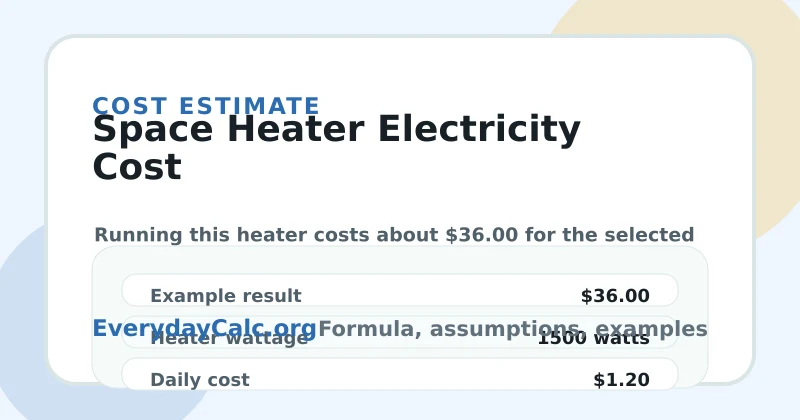
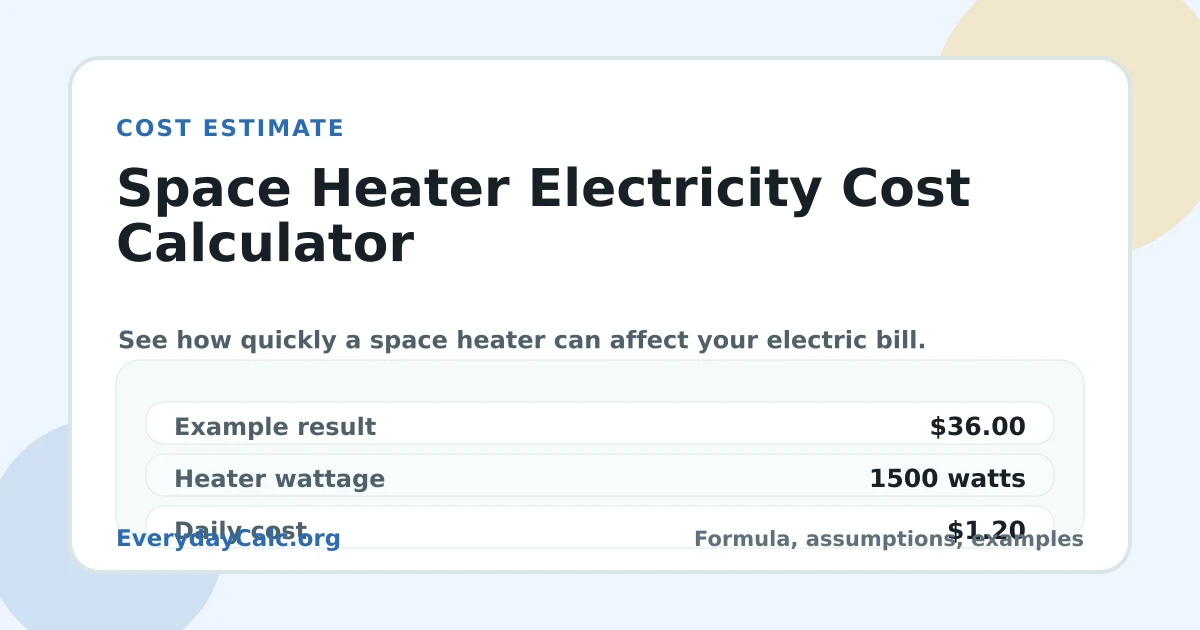
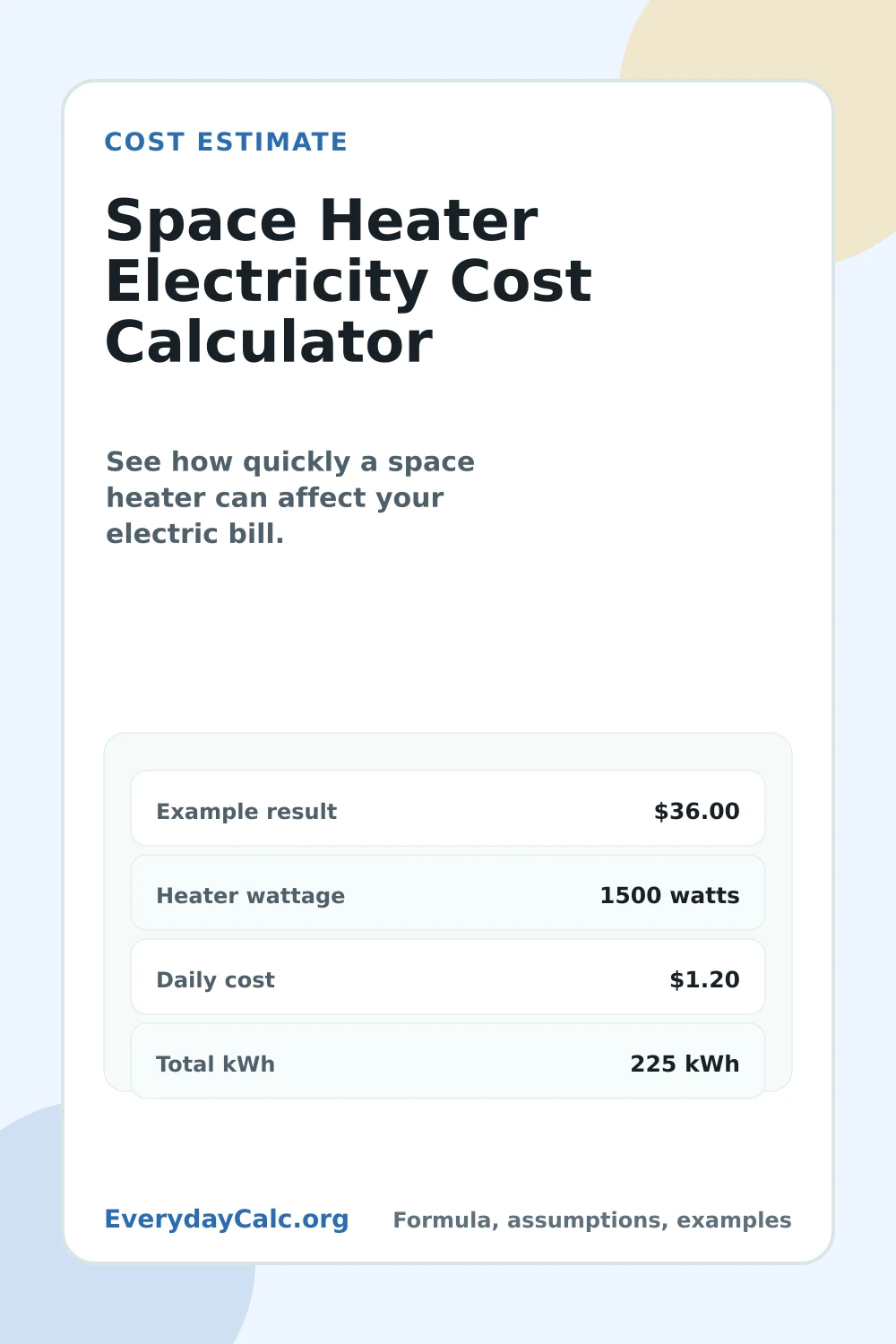
Running this heater costs about $36.00 for the selected period.
- Daily cost
- $1.20
- Total kWh
- 225 kWh
Estimate only. Verify wattage, utility rates, equipment ratings, and safety requirements before relying on this cost. Read the full disclaimer.
More
Optional equipment checkWhat to compare before buying
If a space heater still makes sense after the cost estimate, compare models by wattage, thermostat, timer, tip-over shutoff, overheat protection, and room-size guidance.
Buying checklist
At a glance
- Cost
- Free
- Login
- Not required
- Best use
- Estimate space heater operating cost from wattage, hours used, electric rate, and number of days.
- Output
- Browser result with print and PDF options
- Reviewed
- 2026-07-09
Result summary
Quick answer
With the sample inputs, this calculator returns $36.00. Daily cost: $1.20. The result is an estimated operating cost from the wattage, run time, and rate you enter. Use your all-in kWh rate if you want it to line up more closely with a bill.
Publisher Published by EverydayCalc Editorial Editorial standards and limitations
Each calculator shows its formula and defines the inputs. Worked examples make the math checkable. The page also names the limits that can change the result.
Last calculation review:
Review scope: formula implementation, example parity, visible assumptions, source links, and result presentation. This is editorial and calculation QA, not professional financial, tax, legal, medical, engineering, or safety review.
Results are estimates based on the inputs provided and the assumptions shown on this page. For financial, tax, legal, medical, or other high-stakes decisions, verify results with a qualified professional or official source.
Instructions
How to use this calculator
Open the short walkthrough for choosing and checking inputs.
The calculator multiplies kilowatts by hours, days, and your electricity rate.
Page guide
On this page
Jump directly to the part of the calculator you need.
Calculation details
Formula and methodology
See the exact math used to produce the result.
Cost = energy used or fuel consumed multiplied by your rate, adjusted for runtime, efficiency, or usage period.
Before acting
Assumptions to check
Review the real-world details that can change the estimate.
The key inputs are Heater wattage, Hours per day, Days used, Electricity rate. Confirm watts, hours used, local electricity rate, duty cycle, seasonal use, and efficient alternatives before relying on the cost.
More guidance Examples, methodology, and planning checks Open the worked example, review notes, reference tables, and practical next checks.
When to round up
Round up if the heater runs at full power most of the time.
When to use this calculator
- Estimating monthly or yearly energy cost
- Testing watts, runtime, rate, and duty cycle changes
- Comparing efficient alternatives before buying or changing use
Tips for better estimates
- Use measured watts when possible, especially for appliances that cycle on and off.
- Enter the all-in local electricity rate from a recent bill.
- Rerun the estimate for seasonal use, lower runtime, or a more efficient alternative.
How this calculator is reviewed
This page is checked for inputs, formulas, examples, assumptions, topic fit, and related links. For this calculator, the review also covers watts, hours used, local electricity rate, duty cycle, seasonal use, and efficient alternatives.
The sample result is covered by automated tests, and the page links to related calculators and, where available, supporting guides so readers can check the assumptions before acting. If a formula, label, or assumption looks off, send the page URL and your inputs through the contact page.
How this estimate was built
This page converts heater wattage into kWh, multiplies by hours, days, and electricity rate, then keeps safety and primary-heat limitations visible next to the cost estimate.
Worked example
Example inputs: Heater wattage: 1500 watts; Hours per day: 5; Days used: 30; Electricity rate: $0.16 /kWh. With those values, the calculator returns $36.00. Running this heater costs about $36.00 for the selected period.
Appliance wattage to estimated monthly cost
| 100 watts for 8 hours/day | About $3.90/month at $0.16/kWh |
|---|---|
| 500 watts for 8 hours/day | About $19.47/month at $0.16/kWh |
| 1,000 watts for 8 hours/day | About $38.93/month at $0.16/kWh |
| 1,500 watts for 8 hours/day | About $58.40/month at $0.16/kWh |
Example scenarios
- Use $36.00 as a cost snapshot, then rerun it with the device's measured watts and your local kWh rate.
- A heater, pump, refrigerator, or dehumidifier may cycle, so duty cycle can matter more than nameplate wattage.
- Seasonal use can change the yearly total; compare efficient alternatives before replacing equipment.
Quick reference chart
| Sample result | $36.00 |
|---|---|
| Daily cost | $1.20 |
| Total kWh | 225 kWh |
| Best next step | Use this estimate with the real watts, hours used, local electricity rate, duty cycle, and seasonal use. Compare efficient alternatives if the monthly or yearly cost is higher than expected. |
FAQs
Space Heater Electricity Cost Calculator questions
Can I use this as my exact bill amount?
No. Use it as a planning estimate, then compare watts, hours used, local electricity rate, duty cycle, seasonal use, taxes, and fees with your actual bill.
What rate should I use?
Use the all-in local kWh rate from a recent bill when possible, including delivery charges, riders, taxes, and usage-based fees.
How can I lower the estimated cost?
Try fewer hours, a lower wattage device, better duty-cycle assumptions, off-peak use where available, or a more efficient alternative.
Is the space heater electricity cost calculator exact?
No. It is a cost planning estimate. Actual bills depend on all-in rates, taxes, fees, runtime, duty cycle, weather, and real equipment performance.
What inputs matter most?
Wattage and daily run time are the biggest factors.
Should I add a cost buffer?
Yes. Rates, fees, runtime, weather, standby power, and real-world efficiency can make actual costs higher than a simple estimate.
More resources Saved tools, citations, and additional links Open optional follow-ups, common mistakes, citation details, and more calculators.
Saved tools
Saved calculators
- No saved calculators yet.
Recent tools
Recent calculators
- Recent calculators will appear here.
Common planning mistakes
Using nameplate watts when actual draw is lower, ignoring duty cycle, using the advertised rate instead of the all-in local rate, and assuming seasonal use stays the same all year.
Cite or embed this calculator
If this calculator helps a blog post, classroom resource, forum answer, seasonal guide, or local planning page, link to the canonical calculator URL so readers can run their own numbers and check the assumptions.
EverydayCalc.org, "Space Heater Electricity Cost Calculator", last updated July 9, 2026, https://everydaycalc.org/calculators/space-heater-cost-calculator/Was this calculator helpful?
Suggest an improvementNotice an issue with this calculator? Contact us here.