
Result
48 boxes estimated
Plan for about 48 boxes for a 2-bedroom move with average packing.
- Small boxes
- 18
- Medium boxes
- 17
- Large boxes
- 10
- Wardrobe boxes
- 3
More
Optional equipment checkWhat to compare before buying
Compare moving box bundles by box-size mix, wall strength, handles, tape, labels, and packing paper instead of buying only one box size.
Buying checklist
At a glance
- Cost
- Free
- Login
- Not required
- Best use
- Estimate how many moving boxes you need from bedrooms, occupants, and packing level, then split the count into small, medium, large, and wardrobe boxes.
- Output
- Browser result with print and PDF options
- Reviewed
- 2026-07-09
Result summary
Quick answer
With the sample inputs, this calculator returns 48 boxes estimated. Small boxes: 18. Use 48 boxes estimated as a packing or booking starting point, then add a buffer for closets, fragile items, stairs, elevators, parking, and last-minute items.
Publisher Published by EverydayCalc Editorial Editorial standards and limitations
Each calculator shows its formula and defines the inputs. Worked examples make the math checkable. The page also names the limits that can change the result.
Last calculation review:
Review scope: formula implementation, example parity, visible assumptions, source links, and result presentation. This is editorial and calculation QA, not professional financial, tax, legal, medical, engineering, or safety review.
Results are estimates based on the inputs provided and the assumptions shown on this page. For financial, tax, legal, medical, or other high-stakes decisions, verify results with a qualified professional or official source.
Instructions
How to use this calculator
Open the short walkthrough for choosing and checking inputs.
Start with the suggested mix, then adjust for books, kitchen items, closets, storage areas, fragile belongings, and a 10% to 15% packing buffer.
Page guide
On this page
Jump directly to the part of the calculator you need.
Calculation details
Formula and methodology
See the exact math used to produce the result.
Boxes needed = home size, bedrooms, people, and packing level converted into a practical box mix.
Before acting
Assumptions to check
Review the real-world details that can change the estimate.
The key inputs are Bedrooms, People in home, Packing level. Adjust for closets, storage areas, stairs, fragile items, packing density, access limits, and schedule delays.
More guidance Examples, methodology, and planning checks Open the worked example, review notes, reference tables, and practical next checks.
Why box mix matters
Heavy items belong in smaller boxes. Bulky lightweight items can go in larger boxes, and hanging clothes are easier in wardrobe boxes.
When to use this calculator
- Planning boxes, labor, storage, or truck needs
- Comparing move scenarios before booking
- Adding buffer for fragile, heavy, or last-minute items
Tips for better estimates
- Count closets, garages, storage rooms, and kitchen items separately.
- Add a buffer when a second trip would be expensive.
- Pair box estimates with truck, labor, tape, and supply estimates.
How this calculator is reviewed
This page is checked for inputs, formulas, examples, assumptions, topic fit, and related links. For this calculator, the review also covers room count, box sizes, heavy items, stairs, distance, packing timeline, truck size, and fragile or essential items.
The sample result is covered by automated tests, and the page links to related calculators and, where available, supporting guides so readers can check the assumptions before acting. If a formula, label, or assumption looks off, send the page URL and your inputs through the contact page.
How this estimate was built
This page starts with bedrooms and occupants, adjusts for packing level, then splits the total into a practical mix of small, medium, large, and wardrobe boxes.
Worked example
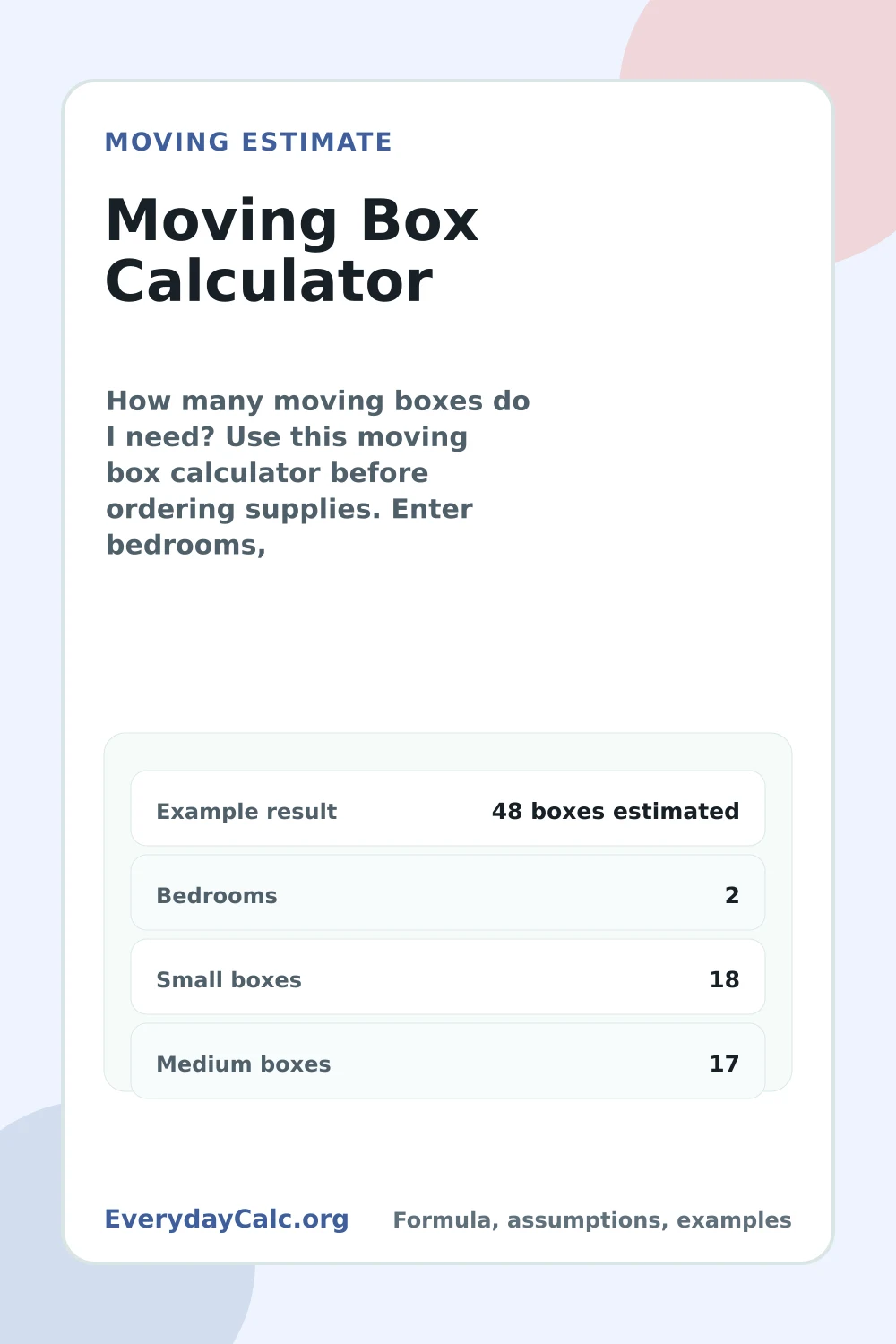
Example inputs: Bedrooms: 2; People in home: 2; Packing level: Average. With those values, the calculator returns 48 boxes estimated. Plan for about 48 boxes for a 2-bedroom move with average packing.
Example scenarios
- A two-bedroom move can use 48 boxes estimated as the first box order, then add more small boxes for books and kitchen items.
- If there is a garage, basement, or storage closet, add 10% to 15% before ordering supplies.
- If fragile items dominate the move, add specialty boxes, packing paper, labels, and tape rather than only more large boxes.
Quick reference chart
| Sample result | 48 boxes estimated |
|---|---|
| Small boxes | 18 |
| Medium boxes | 17 |
| Large boxes | 10 |
| Wardrobe boxes | 3 |
| Best next step | Start with this box mix. Add 10% to 15% if you have a garage, basement, books, or a full kitchen. |
FAQs
Moving Box Calculator questions
Can I use this as my final moving plan?
Use it as a planning estimate, then adjust for furniture, storage areas, stairs, elevator access, distance, fragile items, and timing.
Should I add a moving buffer?
Yes. Moves often need extra boxes, tape, time, labor, and truck space for closets, garages, kitchens, books, and last-minute items.
What should I check before booking?
Check truck availability, mover minimums, storage rules, insurance options, mileage fees, stairs, parking, and building move-in requirements.
Can this replace a mover quote?
No. Use it as a planning estimate, then confirm pricing, availability, fees, and liability coverage with the mover or rental company.
Should I buy extra boxes?
A small buffer is helpful. Most moves need a few extra boxes for last-minute items.
What counts as heavy packing?
Choose heavy if you have lots of books, decor, kitchen items, hobbies, storage bins, or a packed garage.
More resources Saved tools, citations, and additional links Open optional follow-ups, common mistakes, citation details, and more calculators.
Saved tools
Saved calculators
- No saved calculators yet.
Recent tools
Recent calculators
- Recent calculators will appear here.
Common planning mistakes
Underestimating books and kitchen items, forgetting closets and storage spaces, skipping specialty boxes, and not adding buffer for fragile items.
Cite or embed this calculator
If this calculator helps a blog post, classroom resource, forum answer, seasonal guide, or local planning page, link to the canonical calculator URL so readers can run their own numbers and check the assumptions.
EverydayCalc.org, "Moving Box Calculator", last updated July 9, 2026, https://everydaycalc.org/calculators/moving-box-calculator/Embed this calculator
Want the interactive version on your own page? Copy the iframe below or use the embed guide for this calculator. Keep the visible credit text natural: Calculator by EverydayCalc.org.
<iframe src="https://everydaycalc.org/embed/moving-box-calculator/" title="Moving Box Calculator widget by EverydayCalc.org" width="100%" height="600" loading="lazy" style="border:0;max-width:100%;"></iframe>Was this calculator helpful?
Suggest an improvementNotice an issue with this calculator? Contact us here.